TFL Bearing
Product Comparison

E1 vs Standard Spherical Roller Bearings: Complete Load Rating Comparison

Technical comparison of E1 high-capacity and standard spherical roller bearings, including load rating, temperature, and replacement RFQ factors.

June 3, 2026 7 min read Reviewed for sourcing context by TFL Bearing team
E1 seriesload ratingbearing comparisonhigh capacityTCO
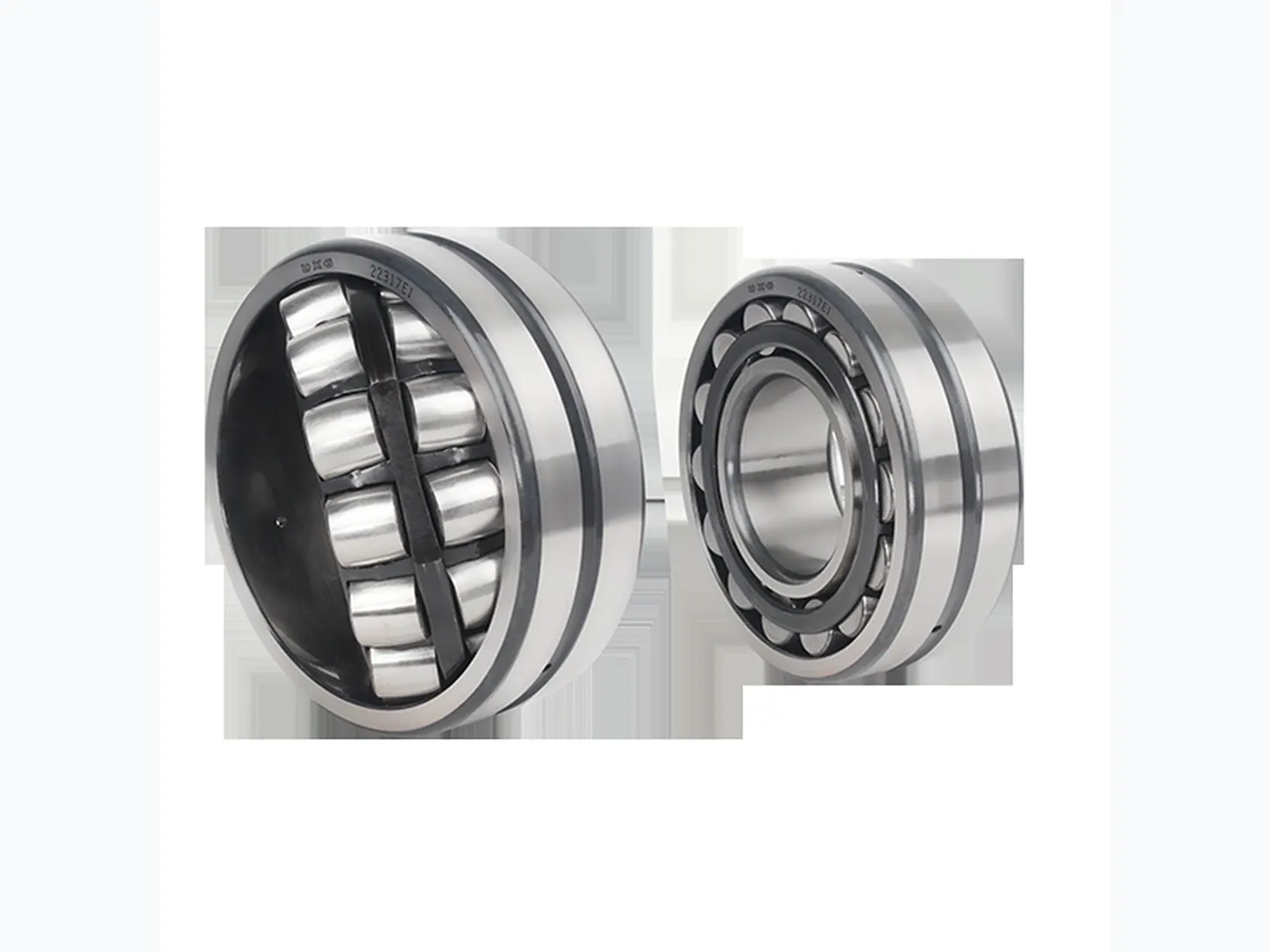
Spherical roller bearing technical review scene for RFQ context

What Makes the E1 Series Different?

The E1 designation indicates an enhanced internal design that delivers up to 20% higher dynamic load rating compared to a standard spherical roller bearing of the same envelope dimensions. This is not a marketing claim — it is a measurable engineering improvement achieved through multiple design optimizations working together.

The Engineering Behind the 20% Improvement

Larger Rollers

The most significant change: E1 bearings use rollers with increased diameter and length within the same bearing cross-section. The roller diameter increase is achieved through optimized raceway profiles and thinner — but stronger — cage designs that allow more space for the rolling elements.

Larger rollers mean more load-carrying material in the contact zone. The dynamic load rating C follows a power relationship with roller size: even a 5% increase in roller diameter can produce a 15% increase in load rating due to the non-linear relationship between contact geometry and load capacity.

Superfinished Raceways

E1 bearings feature a finer surface finish on both raceways and rollers. The smoother surfaces reduce friction, lower operating temperature, and improve oil film formation. The lower operating temperature directly extends grease life and bearing service life.

Reinforced Brass Cage

The E1 cage is a machined brass design (CA type) with reinforced prongs. The brass material provides superior strength and thermal conductivity compared to pressed steel. The reinforced prong geometry allows the cage to handle higher roller forces — which is necessary because the larger, heavier rollers generate higher cage forces at speed.

Load Rating Comparison Table

ParameterStandard SRBE1 SeriesImprovement
Dynamic load rating (C)BaselineUp to +20%Higher load capacity in same envelope
Static load rating (C0)BaselineUp to +15%Better overload protection
Fatigue load limit (Pu)BaselineUp to +25%Extended life under peak loads
Operating temperatureBaseline-5°C to -10°CLower friction = less heat
Grease lifeBaseline1.5–2× longerLower temperature extends grease life

When to Choose E1 Over Standard

Choose E1 when:

  • You need to increase load capacity while keeping the same boundary size after RFQ review
  • The application runs near the load limit of the current standard bearing
  • Operating temperature is a concern and lower friction is beneficial
  • Extended service life is valued — lower TCO through longer replacement intervals
  • The application is in steel, mining, paper, or cement where reliability is critical

Standard SRB is sufficient when:

  • The application operates well below the bearing’s load rating
  • Cost is the primary consideration and the standard bearing’s life is adequate
  • The bearing is in a non-critical position where failure consequences are manageable

Real-World Performance

In steel mill continuous casting applications, E1 series bearings have demonstrated 2–3× the service life of standard bearings in the same roller positions. The combination of higher load capacity and lower operating temperature creates a multiplicative effect on bearing life that exceeds what either improvement would achieve alone.

For procurement teams, the E1’s 20% higher load rating means that in many cases, a smaller E1 bearing can replace a larger standard bearing — reducing weight, cost, and space requirements while maintaining or improving performance.

Engineering Review

Not sure which bearing fits your case?

Send us the current model number, application equipment, operating speed, temperature, load, and quantity. TFL's bearing team can check clearance, cage, sealing, and cross-reference risk before you place an order.

Technical content reviewed for sourcing context by TFL Bearing team.

Request Technical Review

RFQ Details to Prepare

Send the details below so TFL Bearing can review the model, suffix, application risk, documents, and quotation route before confirming supply options.

RFQ detail Example Why it matters
current brand / model SKF 22222 EK/C3, FAG 22320-E1-K, NSK 22320EAKE4, or photo if unclear Brand and model references help identify suffix conventions and avoid assuming equivalence from dimensions alone.
full suffix / marking K, K30, C3, C4, W33, CA, CC, MB, 2RS, or full ring marking photo Suffixes can change bore type, clearance, cage design, lubrication groove, sealing, and replacement risk.
dimensions Bore x OD x width, measured bearing sample, or drawing dimensions Dimensions are a starting check, but they must be reviewed together with suffix and application.
application equipment crusher, vibrating screen, fan, gearbox, conveyor pulley, paper machine, or steel mill position Application context affects load, shock, speed, contamination, lubrication, and document review.
quantity 1 large bearing, 2 pcs for maintenance, 50 pcs distributor stock, or annual demand Quantity affects quote route, packing, production planning, inspection scope, and freight review.
destination Destination country, port, warehouse, distributor address, or project site region Destination affects export documents, packing method, shipping route, and trade-term review.
required documents Inspection report, material certificate, COO, RoHS / REACH statement, packing photos, buyer template Document requirements must be confirmed before quotation because scope depends on order route and buyer template.
full bearing model 22222 EK/C3 W33, 22320 CAK/W33, or photo of the full marking Identifies the series, size group, bore style, clearance reference, and starting point for quotation review.

Ask TFL to Check Your Bearing

Share the basics and TFL Bearing will review the sourcing context for your RFQ.

Engineering Support

Need Bearing Selection Advice?

Send us your application details, bearing specifications, or BOM. TFL Bearing can review model fit, sourcing risk, and available documentation before quotation.