TFL Bearing
Engineering Fundamentals

Understanding Bearing Life: L10, L10h, and Service Life Calculations

Technical guide to bearing life calculations, L10 rating life, L10h in hours, adjusted rating life, and practical bearing selection.

June 10, 2026 8 min read Reviewed for sourcing context by TFL Bearing team
bearing lifeL10L10hrating lifereliabilityISO 281
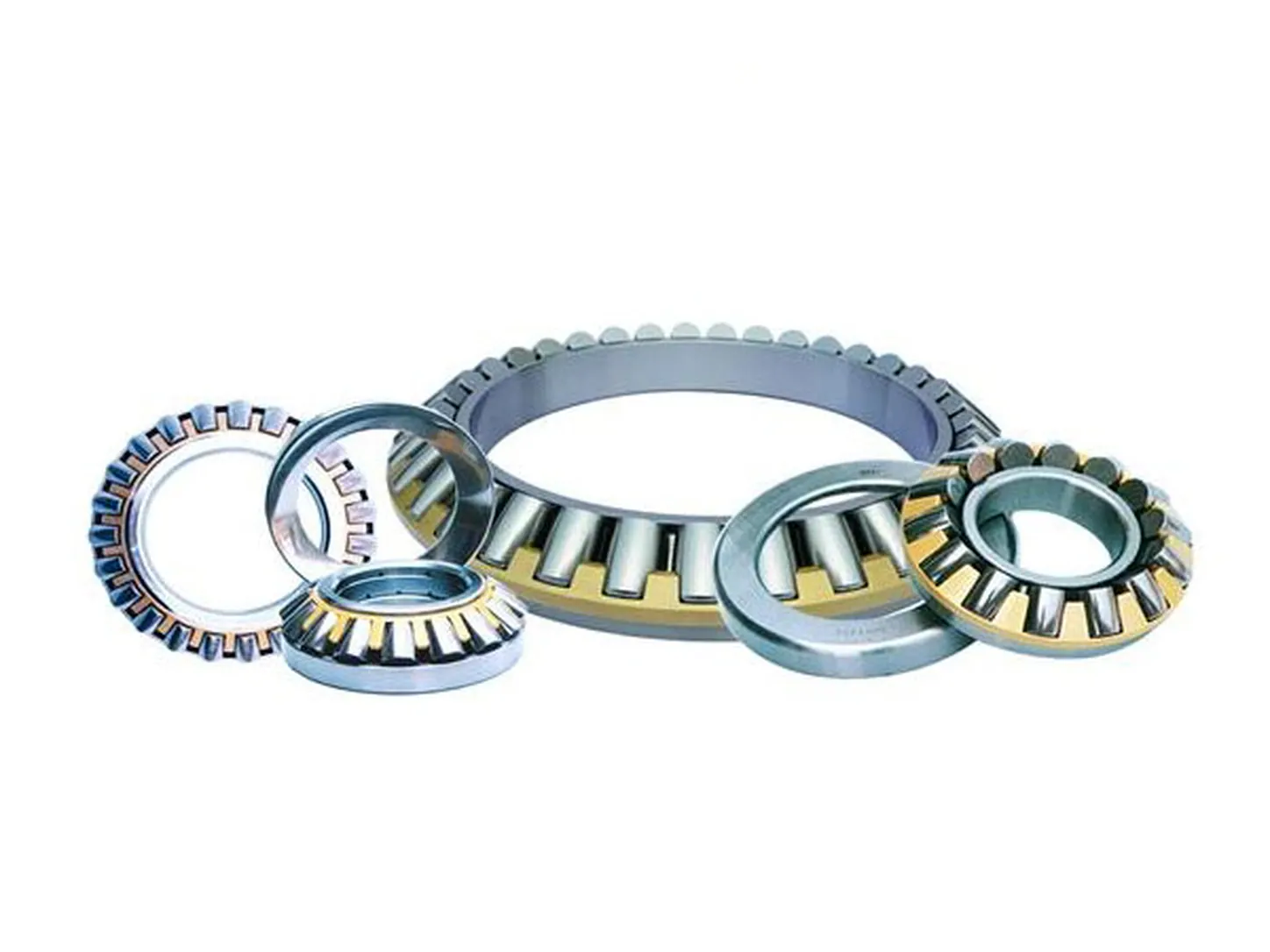
Spherical roller bearing technical review scene for RFQ context

Bearing Life Review Before RFQ

Bearing life is one of the most misunderstood concepts in mechanical engineering. The L10 rating life is a statistical prediction, not a guarantee. It tells you the number of revolutions (or hours) that 90% of a group of identical bearings will complete or exceed under defined operating conditions before the first signs of fatigue spalling appear.

This means:

  • 90% of bearings will reach or exceed L10 life
  • 10% will fail before reaching L10 life
  • The L10 value is a reliability-based prediction, not a warranty period
  • Actual bearing life in a specific application depends on many factors beyond the basic load rating

The Basic Rating Life (L10)

The fundamental equation from ISO 281:

L₁₀ = (C/P)^p million revolutions

Where:

  • C = Basic dynamic load rating (from bearing catalog, in N or kN)
  • P = Equivalent dynamic bearing load (calculated from actual loads, in N or kN)
  • p = Exponent: p = 3 for ball bearings, p = 10/3 for roller bearings

For spherical roller bearings (roller bearings), the exponent of 10/3 means that load has a particularly strong effect on life:

  • Double the load = life reduced to 1/10 of original
  • Halve the load = life increased by approximately 10×

This non-linear relationship is why even small reductions in operating load can produce significant extensions in bearing life.

Converting to Hours (L10h)

For rotating machinery, hours are more useful than revolutions:

L₁₀h = (10⁶ / 60n) × (C/P)^p hours

Where n = speed in RPM.

Example calculation for a spherical roller bearing:

  • Bearing: 22320 CCK/W33, C = 670 kN
  • Radial load: Fr = 45 kN
  • Axial load: Fa = 8 kN
  • Speed: n = 1500 RPM

Step 1: Calculate equivalent load P: P = Fr + Y₁ × Fa (simplified; actual calculation uses X and Y factors from the catalog) P = 45 + 1.8 × 8 = 59.4 kN

Step 2: Calculate L10: L₁₀ = (670/59.4)^(10/3) = 11.28^(3.333) ≈ 3,175 million revolutions

Step 3: Convert to hours: L₁₀h = 3,175 × 10⁶ / (60 × 1500) = 35,278 hours

This means 90% of these bearings will operate for at least 35,000 hours before fatigue spalling appears — approximately 4 years of continuous operation.

Adjusted Rating Life (Lnaa)

ISO 281 provides adjustment factors for more accurate life prediction:

Lnaa = a₁ × aISO × L₁₀

Reliability Factor (a₁)

The basic L10 assumes 90% reliability. For applications requiring higher reliability:

Reliabilitya₁ Factor
90% (L10)1.0
95% (L5)0.64
96% (L4)0.55
97% (L3)0.47
98%0.37
99% (L1)0.25

For a critical steel mill application where a bearing failure would stop production, 97-99% reliability may be required — effectively reducing the calculated life to 25-47% of the basic L10 value.

Life Modification Factor (aISO)

The aISO factor accounts for:

  • Lubrication condition (viscosity ratio κ)
  • Contamination level
  • Fatigue load limit of the bearing

For well-lubricated, clean applications, aISO can exceed 1.0 (extending predicted life). For poorly lubricated or contaminated applications, aISO can be as low as 0.1 (reducing life to 10% of the calculated value).

Practical Implications for Bearing Selection

For New Equipment Design

  1. Calculate the required bearing life for the application
  2. Select a bearing with L10h ≥ required life at the desired reliability level
  3. Use the adjusted life formula (aISO) to account for actual operating conditions
  4. Validate with field experience or testing

For Replacement Bearings

  1. The replacement bearing should have C ≥ original bearing’s C
  2. If upgrading to E1 series, the higher C value can extend life or allow downsizing
  3. Always verify that the replacement clearance and cage type match the application

Typical Required L10h Values

ApplicationTypical Required L10h (hours)
Household appliances2,000–4,000
Machine tools20,000–30,000
Electric motors20,000–40,000
Industrial gearboxes20,000–50,000
Pumps and fans40,000–60,000
Paper machines60,000–100,000
Steel mill rolling mills60,000–100,000
Mining crushers20,000–40,000
Continuous casting lines100,000+

For spherical roller bearings in continuous-process industries (steel, paper, cement), target L10h values of 60,000–100,000 hours are typical.

Engineering Review

Not sure which bearing fits your case?

Send us the current model number, application equipment, operating speed, temperature, load, and quantity. TFL's bearing team can check clearance, cage, sealing, and cross-reference risk before you place an order.

Technical content reviewed for sourcing context by TFL Bearing team.

Request Technical Review

RFQ Details to Prepare

Send the details below so TFL Bearing can review the model, suffix, application risk, documents, and quotation route before confirming supply options.

RFQ detail Example Why it matters
current brand / model SKF 22222 EK/C3, FAG 22320-E1-K, NSK 22320EAKE4, or photo if unclear Brand and model references help identify suffix conventions and avoid assuming equivalence from dimensions alone.
full suffix / marking K, K30, C3, C4, W33, CA, CC, MB, 2RS, or full ring marking photo Suffixes can change bore type, clearance, cage design, lubrication groove, sealing, and replacement risk.
dimensions Bore x OD x width, measured bearing sample, or drawing dimensions Dimensions are a starting check, but they must be reviewed together with suffix and application.
application equipment crusher, vibrating screen, fan, gearbox, conveyor pulley, paper machine, or steel mill position Application context affects load, shock, speed, contamination, lubrication, and document review.
quantity 1 large bearing, 2 pcs for maintenance, 50 pcs distributor stock, or annual demand Quantity affects quote route, packing, production planning, inspection scope, and freight review.
destination Destination country, port, warehouse, distributor address, or project site region Destination affects export documents, packing method, shipping route, and trade-term review.
required documents Inspection report, material certificate, COO, RoHS / REACH statement, packing photos, buyer template Document requirements must be confirmed before quotation because scope depends on order route and buyer template.
full bearing model 22222 EK/C3 W33, 22320 CAK/W33, or photo of the full marking Identifies the series, size group, bore style, clearance reference, and starting point for quotation review.

Ask TFL to Check Your Bearing

Share the basics and TFL Bearing will review the sourcing context for your RFQ.

Engineering Support

Need Bearing Selection Advice?

Send us your application details, bearing specifications, or BOM. TFL Bearing can review model fit, sourcing risk, and available documentation before quotation.