
 EN
EN
 DE
DE  ES
ES  TR
TR  ID
ID  RU
RU  JA
JA  KO
KO 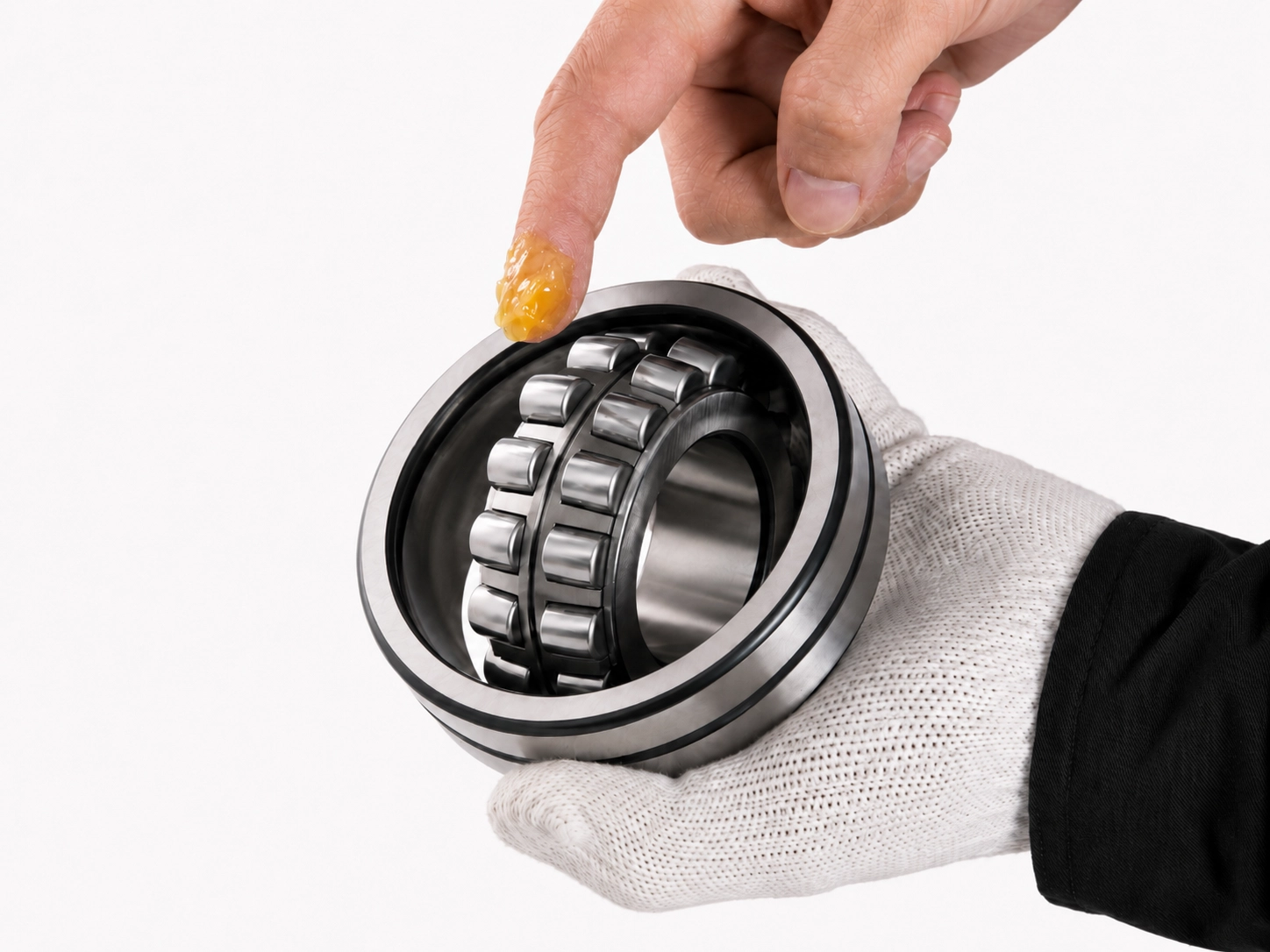
Start With the Operating Conditions
Grease selection and relubrication cannot be set from bearing type alone. Record the exact bearing, speed, load, ring temperature, shaft orientation, housing free volume, seal arrangement, contamination, vibration, and existing lubricant.
The selected bearing manufacturer and lubricant supplier should provide the calculation basis. Generic temperature limits or fixed intervals can be misleading because products with the same thickener family may use different base oils, additives, and operating limits.
Grease Selection Fields
| Field | What to confirm |
|---|---|
| Base-oil viscosity | Required viscosity at the actual operating temperature and speed |
| Thickener | Compatibility with the existing grease, water, process chemicals, and temperature |
| NLGI grade | Pumpability, leakage control, shaft orientation, and centralized-system requirements |
| Additives | Load, shock, corrosion, wear, and material compatibility |
| Base-oil type | Temperature range, oxidation stability, seal compatibility, and changeover requirements |
Use the product data sheet for the exact grease. Do not infer a continuous operating limit from dropping point alone.
Relubrication Interval
Relubrication interval depends on bearing size and type, speed, temperature, load, vibration, contamination, shaft orientation, seal efficiency, and grease life. Apply the selected bearing manufacturer’s method, then adjust it using the lubricant supplier’s temperature and contamination guidance.
Monitor the result after commissioning. Temperature trend, grease condition, purge appearance, vibration, and inspection findings can show whether the initial interval needs revision.
Initial Fill and Relubrication Quantity
Initial fill includes both the bearing and the available housing space. Too much grease can cause churning and heat; too little may leave the contact inadequately supplied. Use the housing design and manufacturer instructions to calculate the fill.
Relubrication quantity formulas vary by bearing and housing arrangement. Confirm:
- whether grease can leave through a purge or drain path;
- whether the bearing should be running during relubrication;
- pump delivery per stroke;
- line volume between the pump and bearing;
- whether the bearing is sealed or has restricted grease flow.
Do not continue pumping only to force visible grease past a seal unless that procedure is specified for the housing.
Grease Compatibility
Compatibility cannot be decided from thickener names alone. Obtain a written compatibility statement or perform the lubricant supplier’s recommended test when changing products.
If compatibility is uncertain, plan a controlled changeover. This may require cleaning the housing and lines, removing the old grease, checking seals, and monitoring temperature and vibration after restart.
Storage and Handling
- keep containers sealed, identified, and within the supplier’s storage-life limit;
- protect grease from dust, water, and mixed dispensing equipment;
- clean fittings before connection;
- label grease guns and transfer tools by product;
- record product batch, quantity, date, and bearing position;
- investigate any unexpected change in color, consistency, odor, purge condition, or operating temperature.
For a lubricant review, send the bearing model and suffix, speed, load, temperature, housing and seal arrangement, current grease, relubrication method, quantity, and inspection history.